
KEY TAKEAWAYS
- Beam angle controls how concentrated or spread out the light appears on the target surface.
- Narrow beams create strong accent effects for display highlights and premium merchandise.
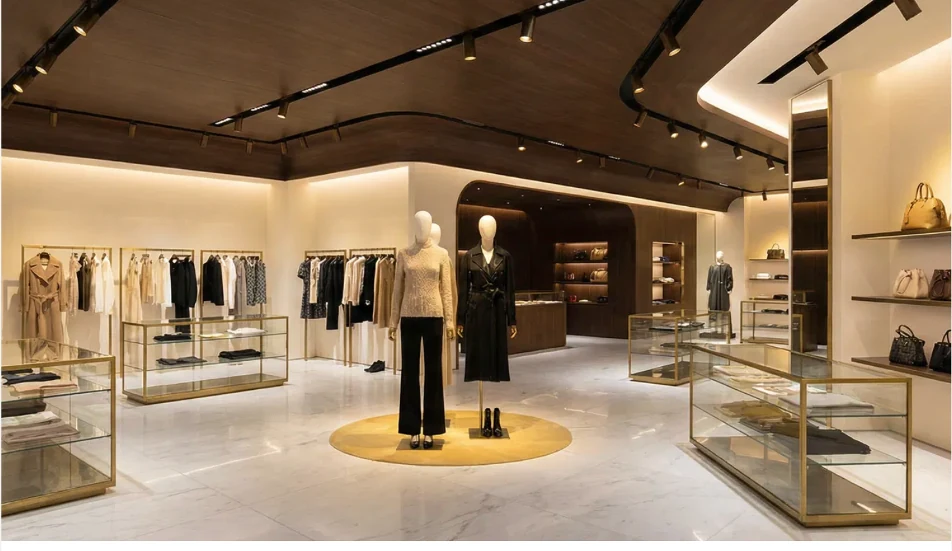
- Medium beams are suitable for most retail, gallery and commercial lighting layouts.
- Mounting height, product distance and desired contrast should be checked together.
01What Is Beam Angle?
Key updates for light source efficiency, documentation and compliance.
Beam angle describes the spread of light emitted from a luminaire. It influences brightness, contrast, visual focus and the feeling of depth in a space.
02Common Beam Angles
Track lighting commonly uses very narrow, narrow, medium and wide beam angles. Each option creates a different visual effect and should be selected according to the application.
Common Beam Angles
15° Very Narrow
Sharp accent lighting for small objects and focused display points.
24° Narrow
Strong highlights for retail displays, walls and feature zones.
36° Medium
Balanced illumination for most commercial and gallery applications.
60° Wide
Soft ambient lighting for larger areas and comfortable circulation.
03How to Choose the Right Beam Angle
Choose a narrow beam when the target area is small or the display requires strong contrast. Use medium beams for balanced merchandise lighting and wide beams where comfortable ambient illumination is required.
04Beam Angle and Mounting Height
Higher ceilings usually require careful beam selection to maintain useful illuminance. Wider beams cover more area, while narrow beams maintain stronger intensity on a specific object.
Beam Angle and Mounting Height
| Ceiling Height | Recommended Beam Angle | Best Use |
|---|---|---|
| 2.5–3m | 15°–24° | Accent lighting, display highlights |
| 3–4m | 24°–36° | General lighting, retail, galleries |
| 4m+ | 36°–60° | Ambient lighting, large areas |
05Conclusion
The right beam angle improves visual hierarchy, reduces wasted light and helps the space feel intentional. For professional projects, confirm beam angle together with CCT, CRI, glare control and mounting position.