
KEY TAKEAWAYS
- Beam angle describes distribution, not brightness on its own.
- Throw distance converts an angle into a pool of light.
- Narrow beams create emphasis but demand accurate aiming.
- Wide beams improve coverage but may spill beyond the target.
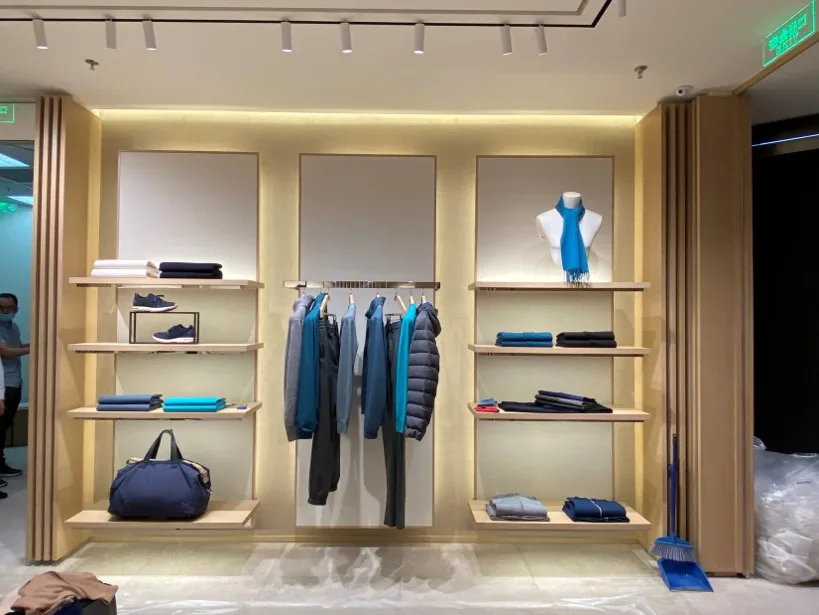
- Use photometric data and mock-ups for final optical decisions.
01Start with the Surface, Not the Catalogue
Imagine a display wall three metres from the track. The question is not whether a 24-degree optic is fashionable; it is whether the resulting beam covers the intended graphic, produces the required centre and edge illuminance, and stays away from adjacent finishes. Beam angle is commonly defined between the directions where intensity falls to 50 percent of peak intensity. Field angle, when published, extends to a lower intensity boundary and describes the softer outer region. Two luminaires carrying the same nominal beam angle can therefore look different because their peak intensity, field distribution, edge softness and optical artefacts differ. The target surface and desired visual hierarchy should establish the requirement before a product family or optic is shortlisted.
Beam angle describes the spread of light emitted from a luminaire. It influences brightness, contrast, visual focus and the feeling of depth in a space.
How to Choose the Right Beam Angle for Architectural Lighting — Design Essentials

01 Narrow
Long throw and small targets; precise aiming is essential.

02 Medium
A flexible choice for displays, tables and architectural details.

03 Flood
Useful for broad surfaces and short distances when spill is controlled.

04 Wide
Wide flood beam angle diagram illustrating extra-wide light distribution for uniform architectural illumination.
02Translate Angle and Distance into Beam Size
For a symmetrical beam, the approximate diameter on a perpendicular plane is twice the throw distance multiplied by the tangent of half the beam angle. At three metres, a 20-degree beam produces a pool a little over one metre wide, while a 40-degree beam is roughly twice that diameter. This geometry is a starting point, not a complete prediction. Tilting a spotlight stretches the footprint into an ellipse, textured surfaces reveal irregularities, and the useful field may extend beyond the nominal beam. Designers should calculate the footprint at the actual mounting and aiming geometry, then read the intensity table or photometric file to estimate illuminance. A narrow beam can cover the object correctly yet still fail if its centre intensity is excessive.
Beam Selection Starting Points
| Lighting task | Starting distribution | Check before approval |
|---|---|---|
| Small feature or long throw | Narrow spot | Peak intensity and aiming tolerance |
| Merchandise bay or artwork | Medium beam | Footprint and edge softness |
| Large surface or short throw | Wide/flood | Spill, overlap and uniformity |
03Match Distribution to the Lighting Role
Very narrow and narrow beams suit small objects, long throws and deliberate focal points. Medium beams are versatile for mannequins, tables, artwork and retail bays. Wide or flood distributions support larger surfaces, closer mounting distances and softer overlap. Wallwashing is a separate optical task: trying to create uniform vertical illumination with ordinary wide spotlights often leads to bright scallops at the top and weak light below. Cabinet lighting introduces short distances where even a medium optic may be too concentrated. SHOWLITE can address controlled display and cabinet accents, while BEAMX and SPECTRUM provide relevant spotlight platforms for architectural emphasis. The deciding evidence should be the selected optic’s photometry rather than the family name alone.
04Plan Overlap, Contrast and Aiming
A single beam is rarely judged in isolation. In a gallery line or retail run, adjacent pools should overlap enough to avoid dark gaps without erasing the rhythm of the composition. Uniform schemes may use spacing near the beam radius or another value established by calculation; accent schemes can separate pools intentionally. Contrast ratios also depend on ambient light. Increasing accent illuminance will not create drama if uncontrolled spill raises the surrounding brightness at the same time. Keep aiming angles comfortable for normal approach directions, protect reflective merchandise from distracting highlights, and check whether the luminaire body can reach the required tilt without exposing the light engine. Lockable aiming and repeatable accessories become valuable when displays change frequently.
05Specify an Optical Set, Then Test It
A robust schedule states the beam angle or optic code, lumen package, CCT, colour rendition, accessories, aiming intent and dimming range. It may include two or three optics within one visual family rather than forcing a single distribution across every task. The Ferragamo Beijing context illustrates why: perimeter merchandise, feature displays and intimate product details ask for different beam scales while the ceiling still needs a coherent language. Use calculation for coverage and illuminance, then test representative narrow, medium and wide distributions on actual materials. The best beam is the one whose centre, edge and spill cooperate with the architecture. It should direct attention accurately without announcing the optical mechanics that produced the effect. One further check is the tolerance of the scheme to construction variation. Track positions may shift, ceiling heights may change and display depths may differ from the tender drawings. A very narrow optic can magnify each of those deviations, producing missed targets or visible hot spots. Where the layout is likely to evolve, provide an optical family with interchangeable distributions and keep spare lenses or reflectors in the maintenance package. Record aiming by target rather than by a generic tilt angle, because the target remains meaningful after small site changes. For exterior-facing glazing, inspect the installation after dark from both inside and outside; beams that work on merchandise may also create distracting reflections in the shopfront. Optical selection is complete only when it remains controllable under real tolerances.