
KEY TAKEAWAYS
- Track systems are flexible and easy to re-aim.
- Recessed downlights create a quieter ceiling plane.
- Both formats can provide precise optics and good comfort.
- Maintenance and control infrastructure affect the choice.
- A hybrid layout can separate adaptable and permanent lighting layers.
01Two Ceiling Strategies, Not Two Competing Products
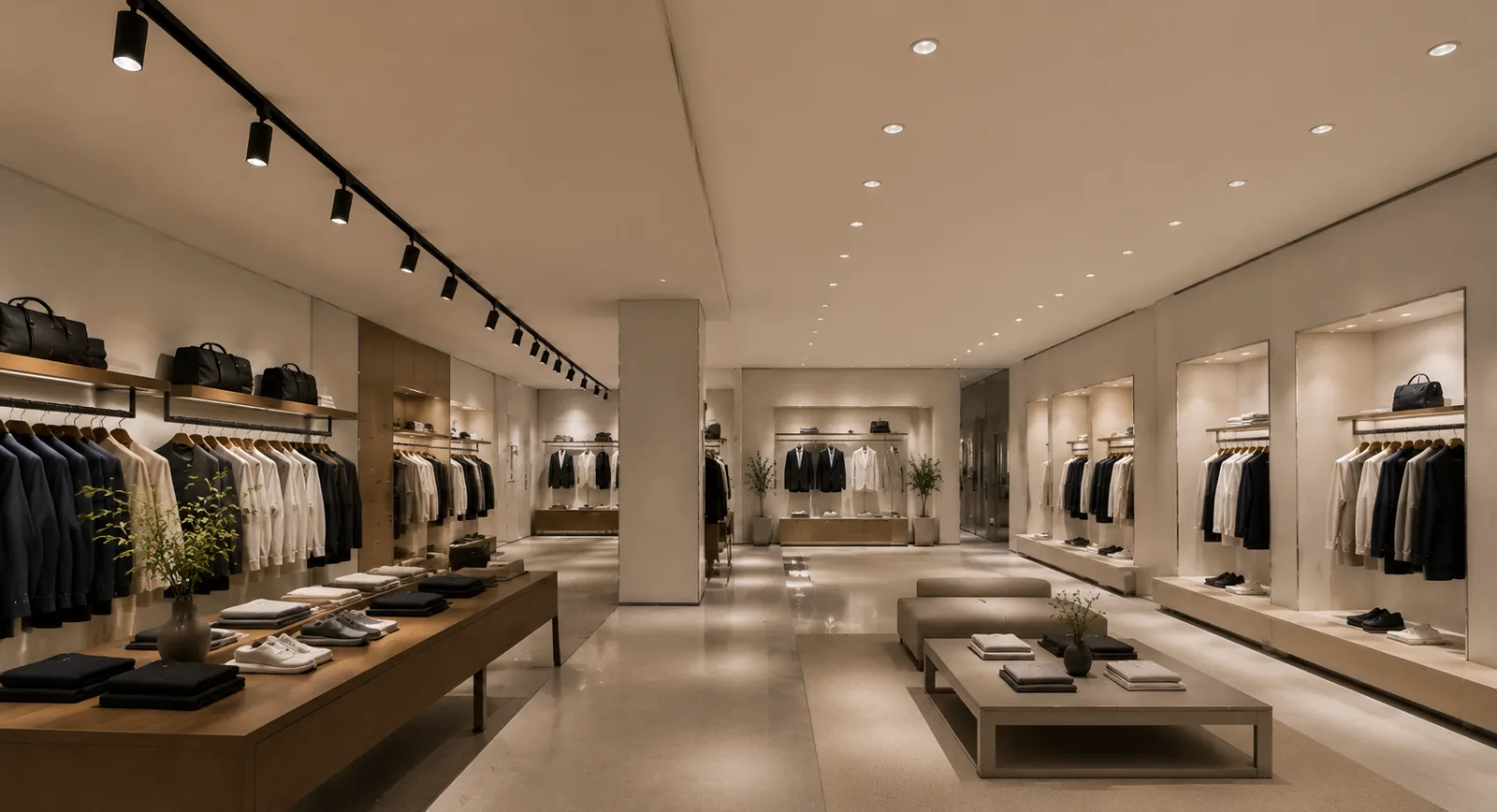
A track spotlight and a recessed downlight can use similar LED engines and beam optics, yet they produce very different architectural consequences. Track lighting places an adaptable technical line below or within the ceiling. Luminaires can be moved, added and re-aimed as displays change. Recessed downlights conceal most of the equipment and preserve a calm plane, but their positions are largely fixed once the ceiling is completed. The choice should begin with the expected life of the layout. A fashion floor re-merchandised every month values flexibility; a hotel corridor with permanent artwork may value quiet integration. Neither format is inherently more professional. Each expresses a different balance between change, visual order and construction commitment.
Track Lighting vs Recessed Downlights — Design Essentials
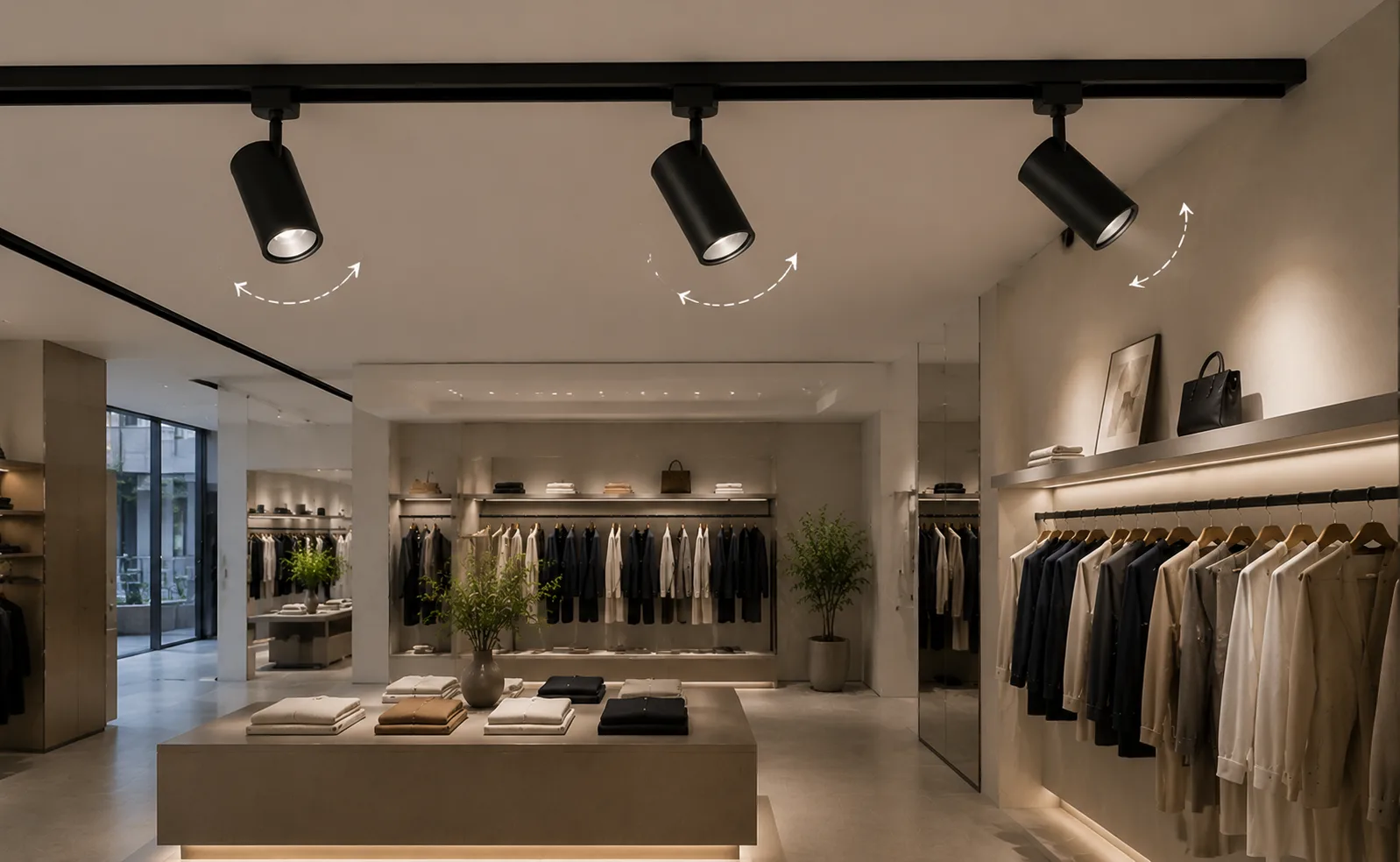
01 Flexibility
Track heads can move and re-aim as layouts evolve.
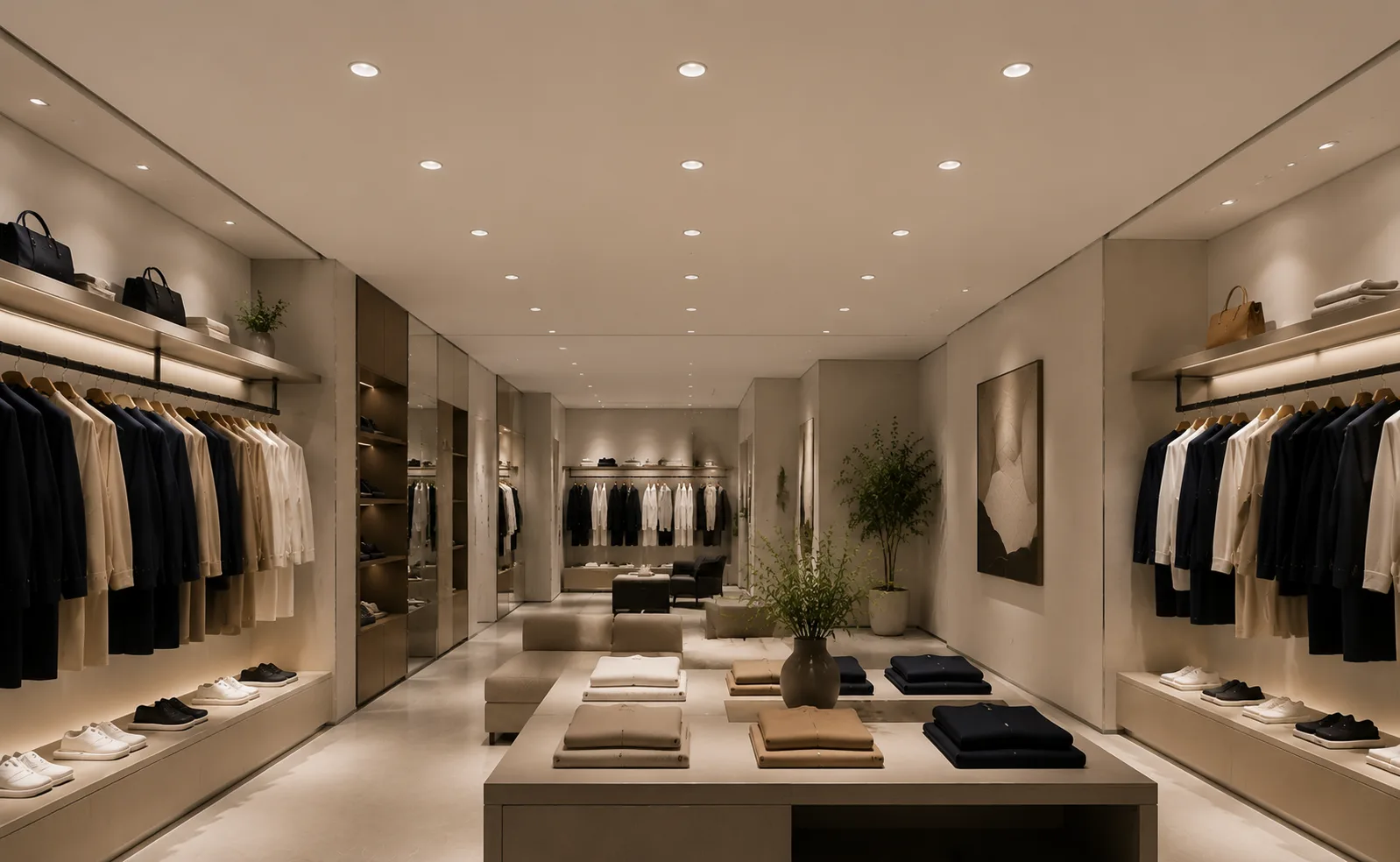
02 Integration
Recessed fittings protect a calm, continuous ceiling plane.
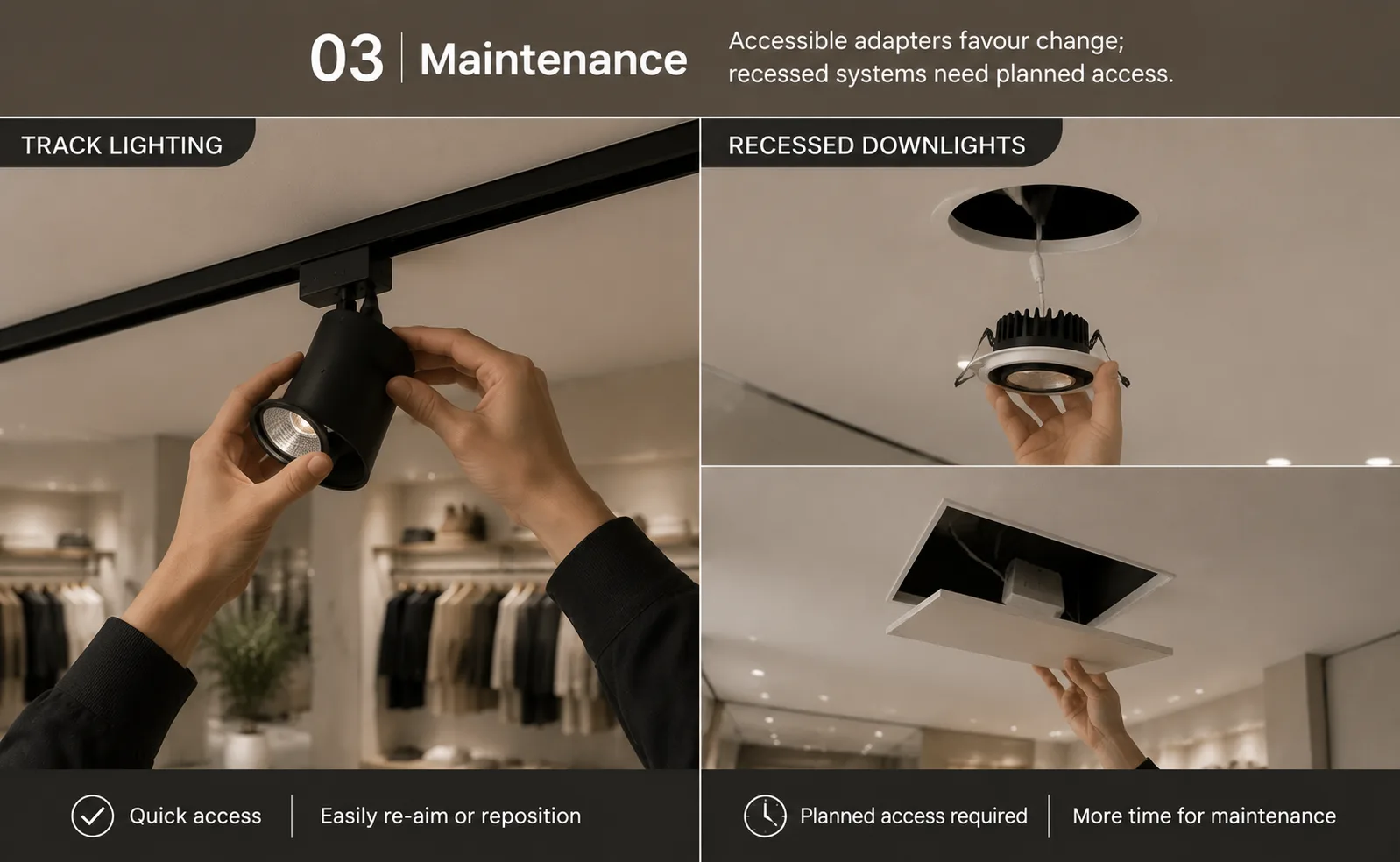
03 Maintenance
Accessible adapters favour change; recessed systems need planned access.
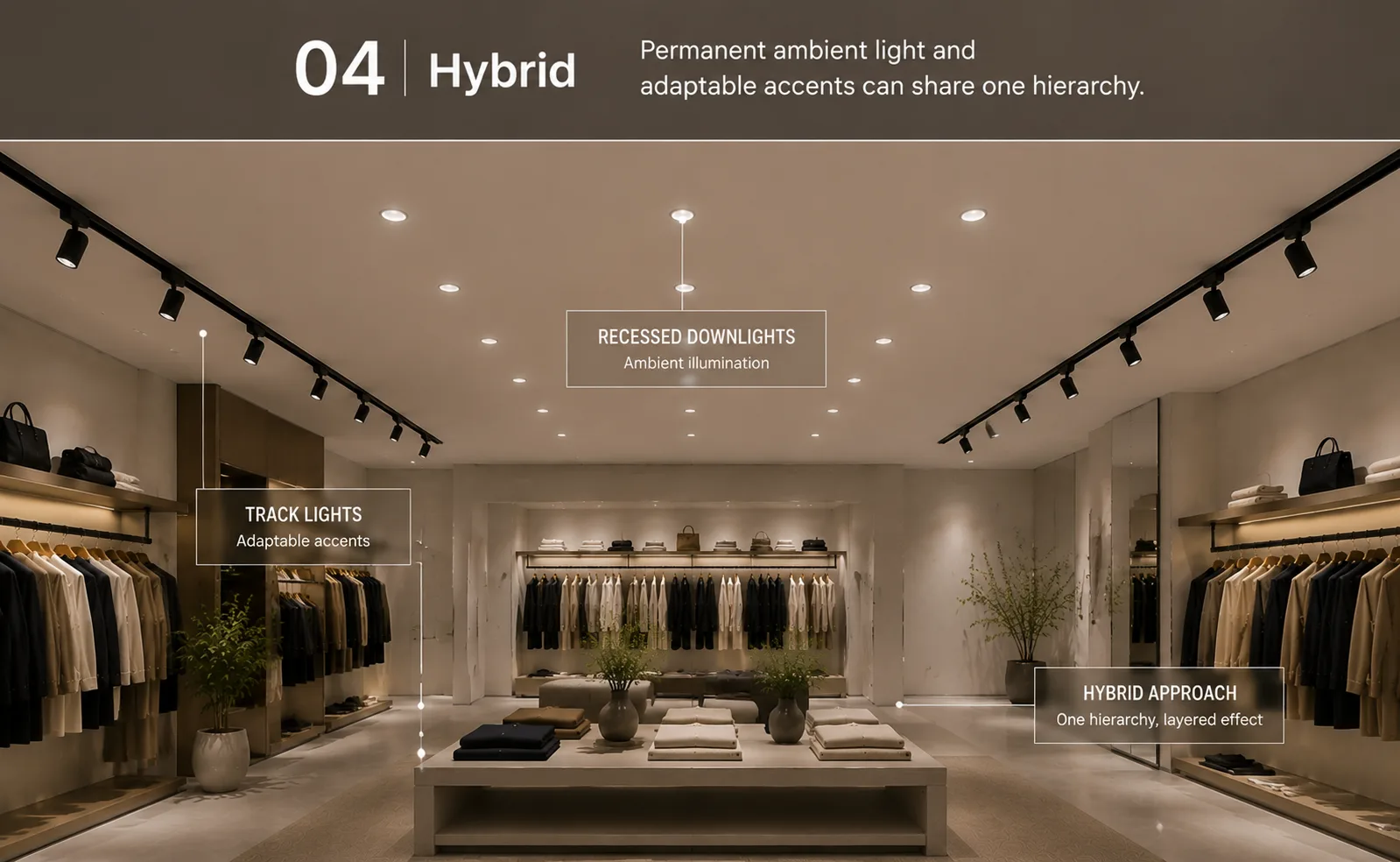
04 Hybrid
Permanent ambient light and adaptable accents can share one hierarchy.
02Where Track Lighting Is Strongest
Track is effective in retail, galleries, showrooms and multipurpose spaces where focal points move. Continuous infrastructure allows adjustable spacing and makes later additions simpler, subject to circuit capacity and system compatibility. Accessories such as snoots, honeycombs and framing devices can shape individual accents. BEAMX and SPECTRUM are relevant spotlight families for precise architectural and merchandise lighting. The challenges are equally visible: the track line and adapters become part of the ceiling composition, dense clusters can look untidy, and poorly aimed sources can create glare. A disciplined track plan establishes datum lines, maximum luminaire density, aiming zones and cable or driver integration before flexibility turns into visual clutter.
Track and Recessed Comparison
| Decision factor | Track lighting | Recessed downlights |
|---|---|---|
| Layout change | Highly adaptable | Position largely fixed |
| Ceiling appearance | Visible technical line | Quiet integrated apertures |
| Best-fit role | Changing accents | Stable ambient or focused light |
03Where Recessed Downlights Earn Their Place
Recessed fittings support hospitality, offices, residences and refined retail areas where the ceiling should read as a continuous architectural surface. Deep optical positions can provide good cut-off, and trimless details can reduce visible hardware further. SILO is relevant to premium hospitality-style downlighting where serviceable modularity and controlled ceiling presence are valued. Recessed layouts require early coordination with structure, services and ceiling modules. They are less forgiving when partitions or displays move, and maintenance access must be protected. Adjustable recessed versions introduce some flexibility, though not the relocatability of track. Their success depends on accurate setting-out: a misplaced aperture remains visible even if the light can be aimed toward the target.
04Compare Performance on Equal Terms
Format alone does not determine beam quality, efficacy, colour rendering or glare. Compare the actual photometric files, output packages and shielding options. A track spotlight with a deep optic may be more comfortable than a shallow recessed unit; a fixed downlight can provide better ambient uniformity than a collection of spotlights used as general light. Controls differ too. Multi-circuit or data-enabled track can offer granular flexibility, while recessed circuits may integrate neatly with room-based control and sensors. Review driver location, emergency requirements, acoustic ceilings, fire ratings and replacement strategy. The cost comparison should include infrastructure, installation, commissioning and future changes rather than only luminaire prices.
05Use a Hybrid When the Architecture Has Two Speeds
Many commercial interiors contain permanent and changeable layers. Recessed downlights can establish ambient comfort in circulation, fitting rooms or hospitality zones, while track spotlights handle seasonal displays and focal merchandise. In Ferragamo Beijing, a combination of BEAMX or SPECTRUM accents with quieter SILO downlighting can illustrate this division: adaptable emphasis where the presentation changes, integrated light where the spatial function is stable. The key is visual coordination. Match CCT and colour quality, manage ceiling alignments and prevent both systems from lighting the same surface without purpose. A hybrid is successful when each layer has a clear responsibility; it becomes wasteful when flexibility is added everywhere simply because it is available. There is also a programme question. Track can shorten future refurbishment work because lighting positions change without reopening the ceiling, yet its infrastructure and adapters must remain available for the expected service life. Recessed systems may offer a longer visual continuity if replaceable modules share a stable housing. Ask the client how frequently merchandising, tenancy or furniture layouts change and who will perform the adjustments. A flexible system without trained ownership can drift into inconsistent aiming and overloaded circuits. Conversely, a fixed system in a rapidly changing store can generate repeated ceiling works. Document spare capacity, compatible accessories, aiming rules and replacement pathways for either option. Life-cycle flexibility is achieved by pairing the right hardware with a realistic operational plan, not by selecting the format that appears most adaptable on day one.