
KEY TAKEAWAYS
- Begin with merchandise and customer journeys.
- Layer ambient, accent, vertical and display lighting.
- Colour quality must suit the products being sold.
- Flexible aiming supports changing presentations.
- Commission scenes and document repeatable settings.
01Map What the Customer Should Notice First
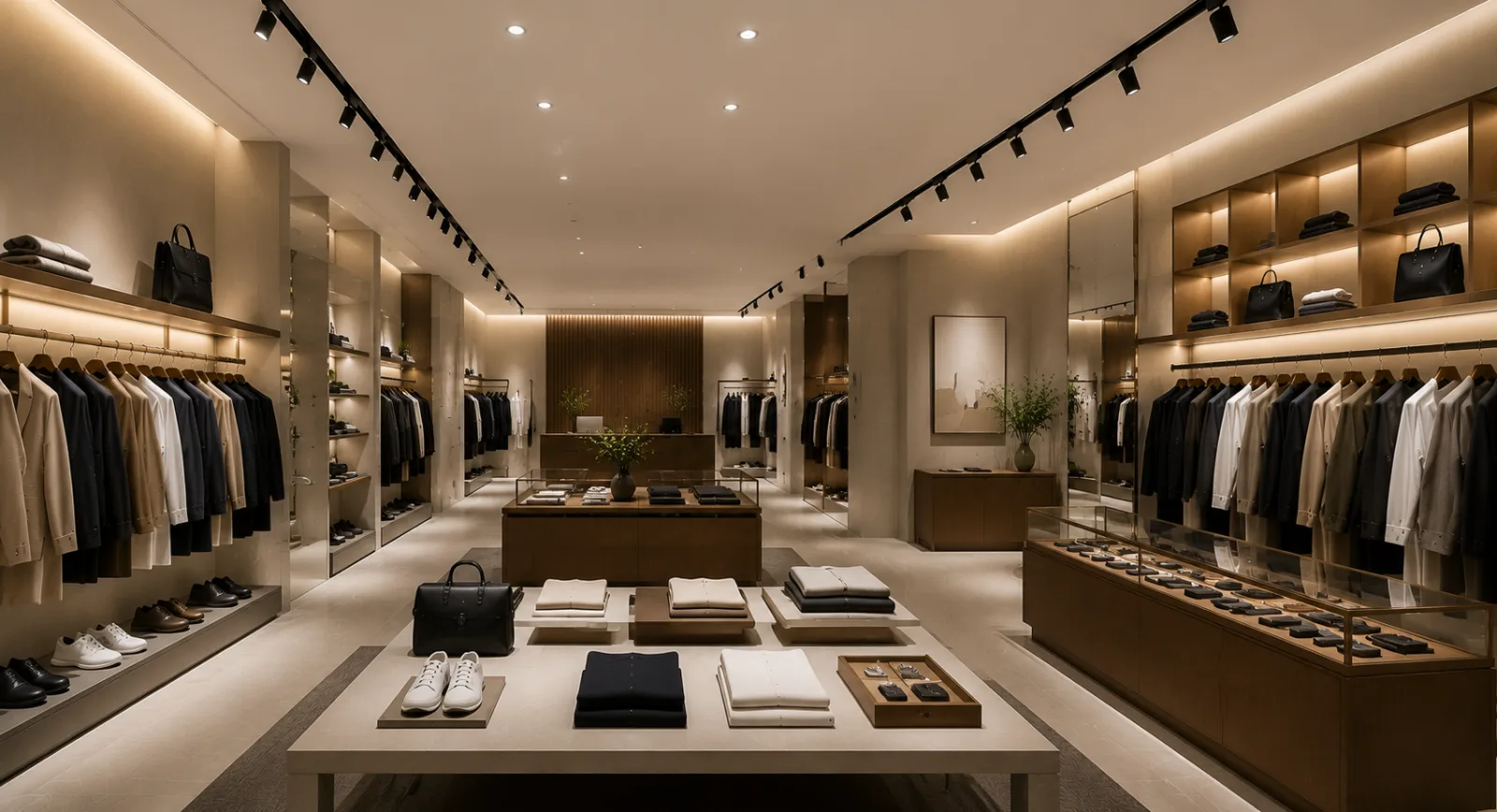
Retail lighting begins with attention, not with a fixture count. From the entrance, the customer should read the brand threshold, key merchandise and route through the store in a deliberate order. Inside, feature tables, wall displays, fitting areas and service points compete for emphasis. Draw this hierarchy on the plan before assigning luminaires. The brightest element should usually be a product or architectural surface rather than the light source itself. Contrast can create focus, but extreme contrast slows adaptation and makes circulation uncomfortable. A successful scheme guides movement almost silently: it makes products easy to inspect, faces comfortable to read and navigation intuitive while preserving the atmosphere promised by the brand.
How to Select the Right Lighting for Retail Stores — Design Essentials
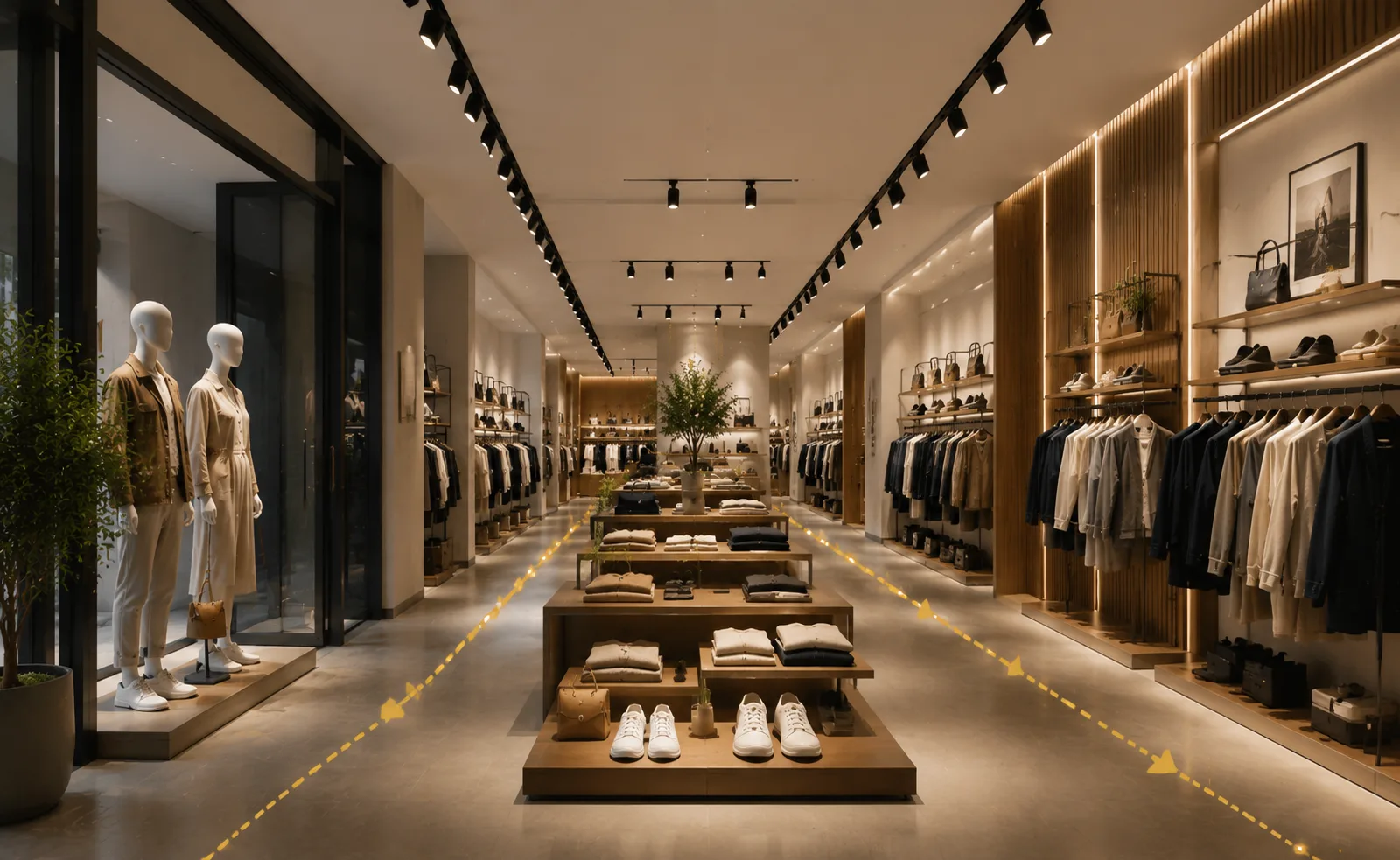
01 Journey
Entrance, focal points and circulation establish the order of attention.
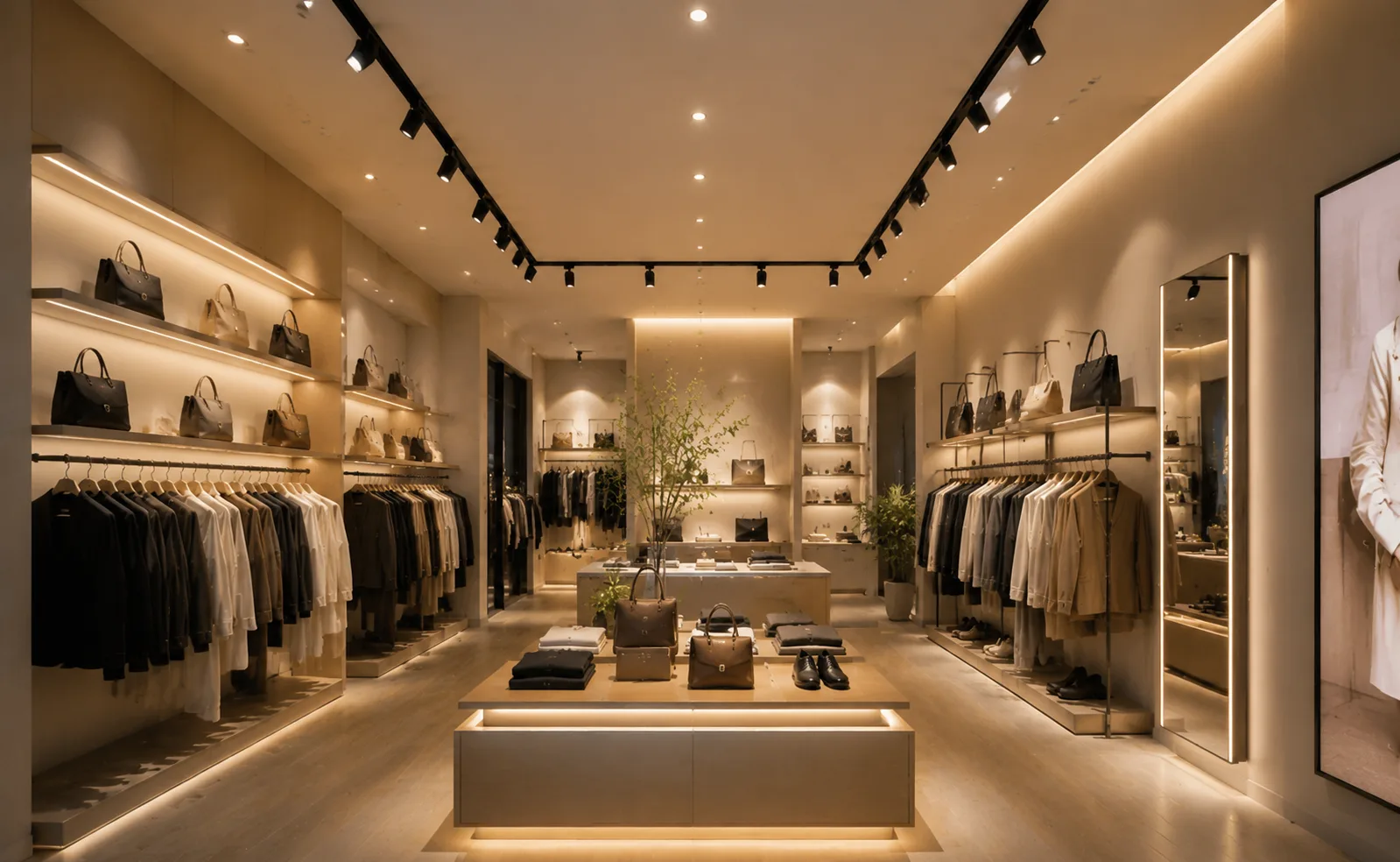
02 Layers
Ambient, accent, vertical and display light perform distinct roles.
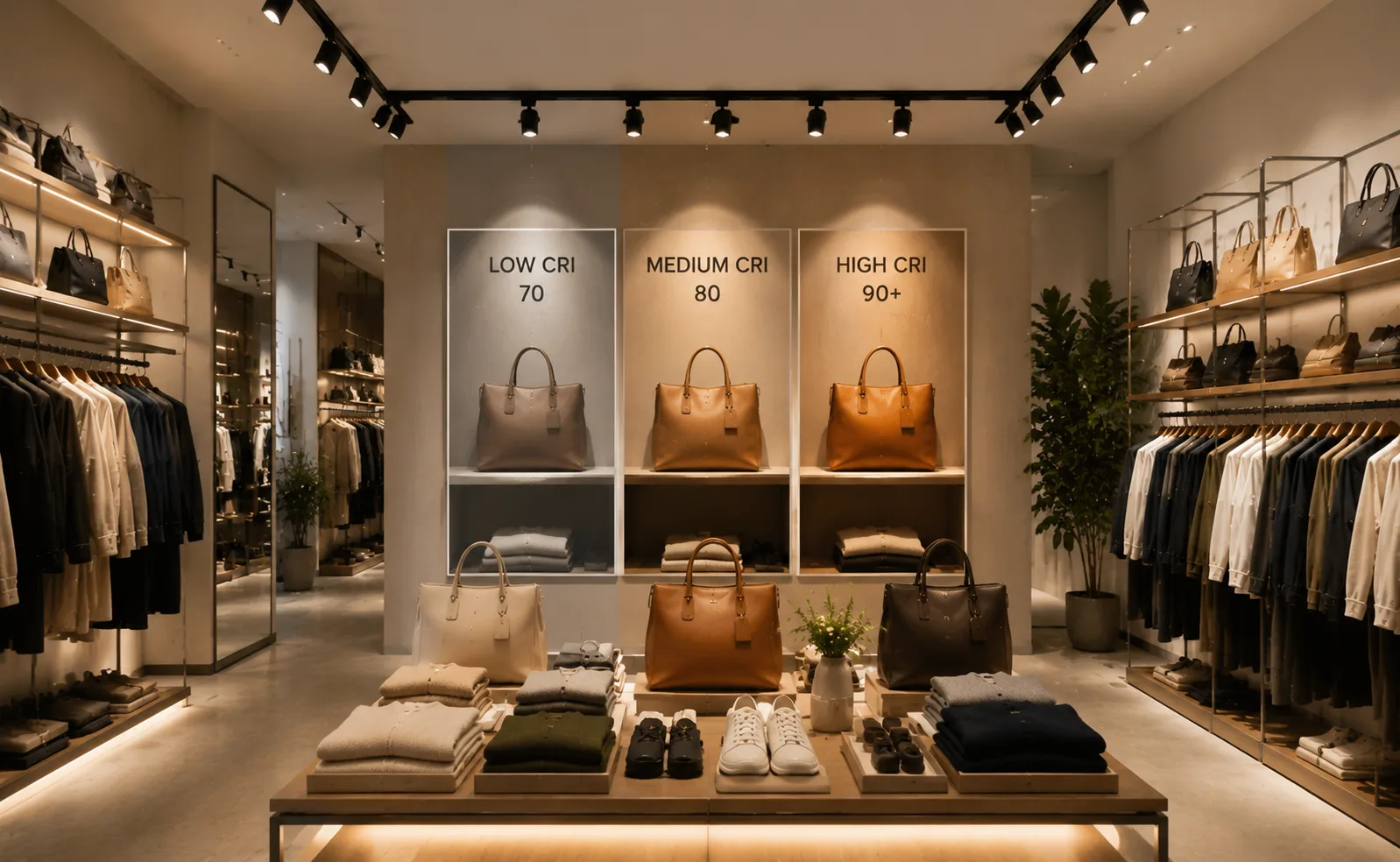
03 Colour
Product-specific rendering keeps merchandise credible and desirable.
04 Commissioning
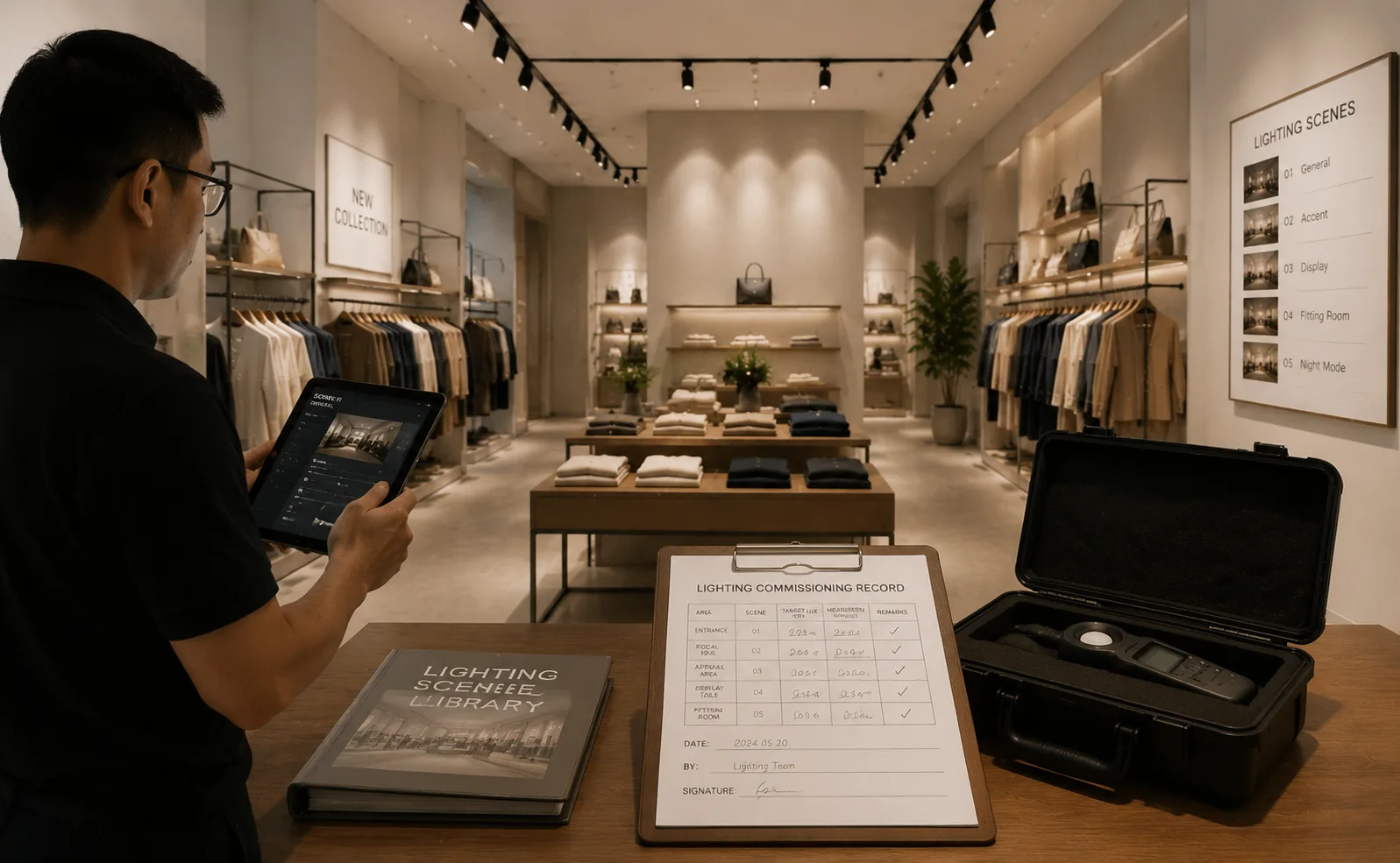
Aiming records and scenes protect the concept after handover.
02Build Four Cooperative Lighting Layers
Ambient light establishes basic visibility and adaptation. Accent light creates focal emphasis. Vertical light gives walls, shelving and graphics presence, often making the space feel brighter more efficiently than raising horizontal illuminance everywhere. Integrated display light handles cabinets and close-range details. These layers should be separately controllable so that scenes can respond to trading hours, events and daylight. BEAMX can deliver focused retail accents, INTERO can provide adjustable high-output downlighting where ceiling integration is important, and SHOWLITE can address compact display or cabinet tasks. The right mix depends on throw distance, target size and display geometry. Avoid using accent spotlights as the only ambient source; the result often becomes patchy and visually tiring.
Retail Lighting Layers
| Layer | Primary purpose | Typical tool |
|---|---|---|
| Ambient | Comfort and orientation | Controlled downlighting |
| Accent / vertical | Hierarchy and wall presence | Adjustable spotlight or wall optic |
| Integrated display | Close-range product detail | Compact cabinet spotlight |
03Protect Product Colour and Material Truth
Merchandise must look attractive without becoming misleading. Specify CCT and colour rendition according to the product category, interior palette and brand position. Fashion benefits from reliable neutrals, skin tones and saturated colours; food may require careful red and warm-tone rendering; jewellery needs control of sparkle, contrast and reflections. CRI is a useful threshold, but R9 or TM-30 information may reveal differences hidden by the average. Consistent chromaticity prevents one bay from looking greener or pinker than the next. Test real fabrics, packaging, metals and timber under the proposed sources. Cameras may also matter for social content, making flicker and spectral behaviour relevant beyond conventional visual assessment.
04Control Glare While Keeping Flexibility
Retail layouts change, so aiming and optical options must accommodate new focal points. Track infrastructure or adjustable recessed fittings can provide flexibility, but an unlimited aiming range does not guarantee a disciplined result. Set rules for normal aiming angles, beam overlap and accessories. Shield high-luminance apertures from the customer’s approach direction and check reflections in mirrors, glass cases and polished stone. Staff views behind counters may differ from customer views and deserve separate review. Controls should allow accents and ambient layers to dim together in a stable hierarchy. Record final aiming and scene levels during commissioning so that cleaning, relamping or merchandising changes do not gradually dismantle the original composition.
05Turn a Flagship Solution into a Repeatable Standard
A prototype store should produce more than photographs. Document luminaire types, optics, aiming points, mounting details, colour data, control scenes and acceptable substitutions. Measure representative horizontal and vertical illuminance, but also review luminance and customer comfort. Dior Shanghai offers the type of luxury context where focused BEAMX accents, discreet INTERO downlighting and detailed SHOWLITE display light can be coordinated around merchandise rather than equipment. For rollout, identify which decisions are fixed brand principles and which may adapt to ceiling height or local architecture. The result should remain recognisably consistent across locations without forcing identical layouts onto different spaces. Good retail standards preserve intent while leaving room for professional judgement. Energy targets should be resolved through hierarchy and control rather than uniform reduction. Put output where merchandise and vertical surfaces need it, select efficient optics that keep spill inside the target, and dim zones when daylight or trading patterns allow. Excess accent light can force the ambient layer upward to maintain adaptation, increasing both energy use and glare. Commission a normal trading scene, cleaning scene, event scene and after-hours scene where relevant. Train store teams to adjust focus without defeating the design, and provide a simple record of approved beam angles and output limits. Maintenance should include lens cleaning, failed-module matching and periodic re-aiming after display changes. The retail environment stays effective when visual standards and operational routines are treated as one system. Regular reviews also keep seasonal presentations aligned with the original visual hierarchy.