

KEY TAKEAWAYS
- Magnetic tracks accept movable modules within a defined system.
- The track can support spot, linear and general-light elements.
- Compatibility and power capacity must be checked early.
- Flexibility still needs disciplined spacing and aiming.
- Access, drivers and controls shape long-term performance.
01A Lighting Infrastructure That Can Change
A conventional recessed layout fixes each aperture to one location. Magnetic track lighting takes a different approach: a low-voltage conductive track becomes the infrastructure, and compatible modules attach through a magnetic and mechanical connection. Spotlights, linear elements and diffuse modules can be repositioned or exchanged as the room changes, subject to the manufacturer’s system rules. This flexibility is useful, but the magnet is not the principal design achievement. The value lies in combining power distribution, compact mechanical integration and a coordinated family of light distributions. A well-planned system can evolve with furniture or display layouts while maintaining a consistent architectural line. A poorly planned one becomes an overfilled channel with uncertain loads and arbitrary aiming.
Magnetic Track Lighting: Benefits, Applications and Design Tips — Design Essentials
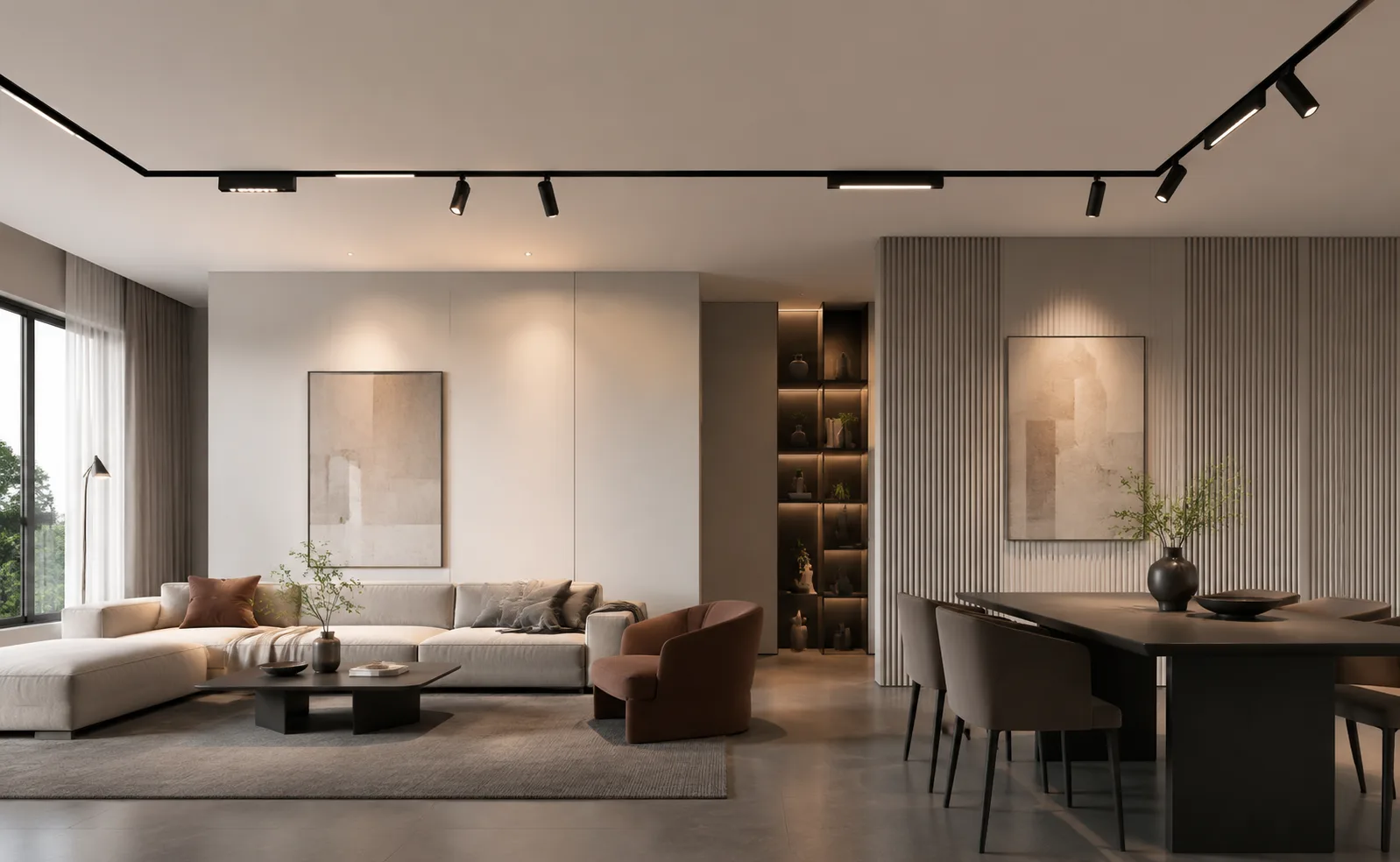
01 Adaptability
Compatible modules can move as furniture and focal points change.
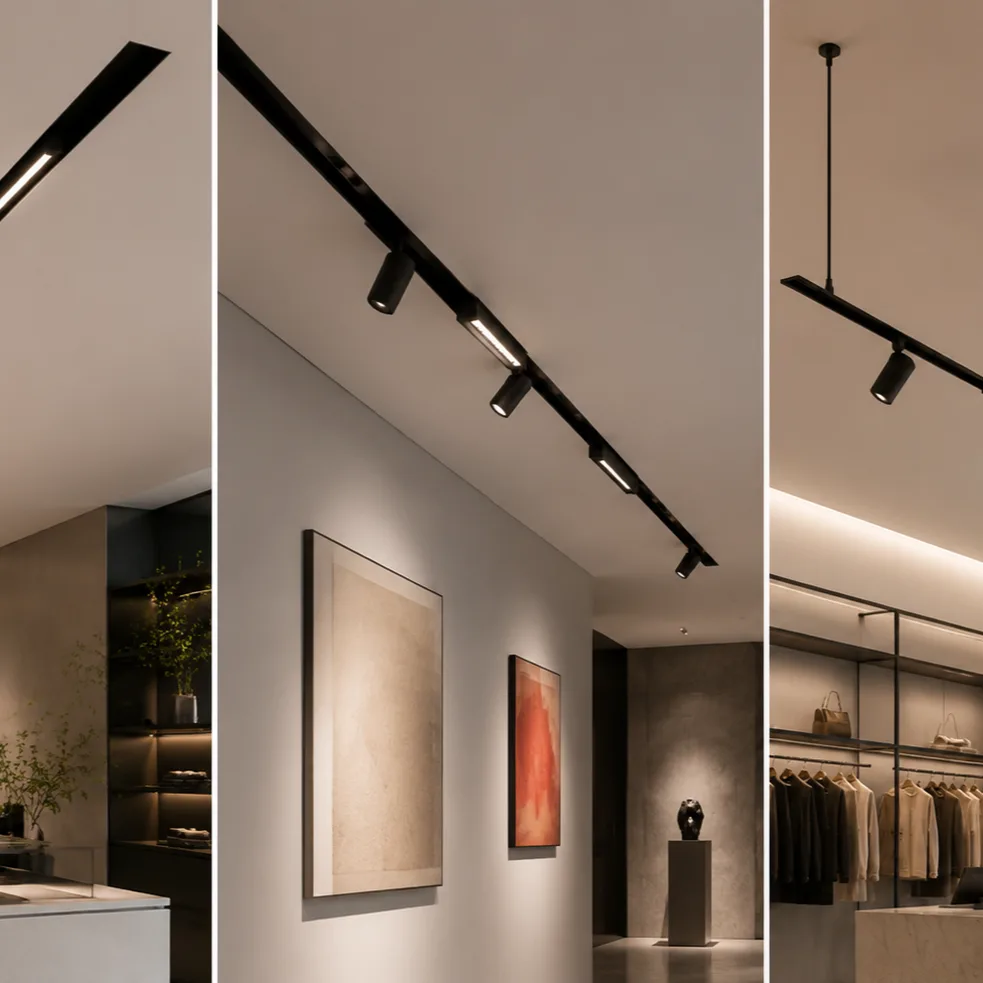
02 Integration
Recessed, surface and suspended tracks create different architectural expressions.
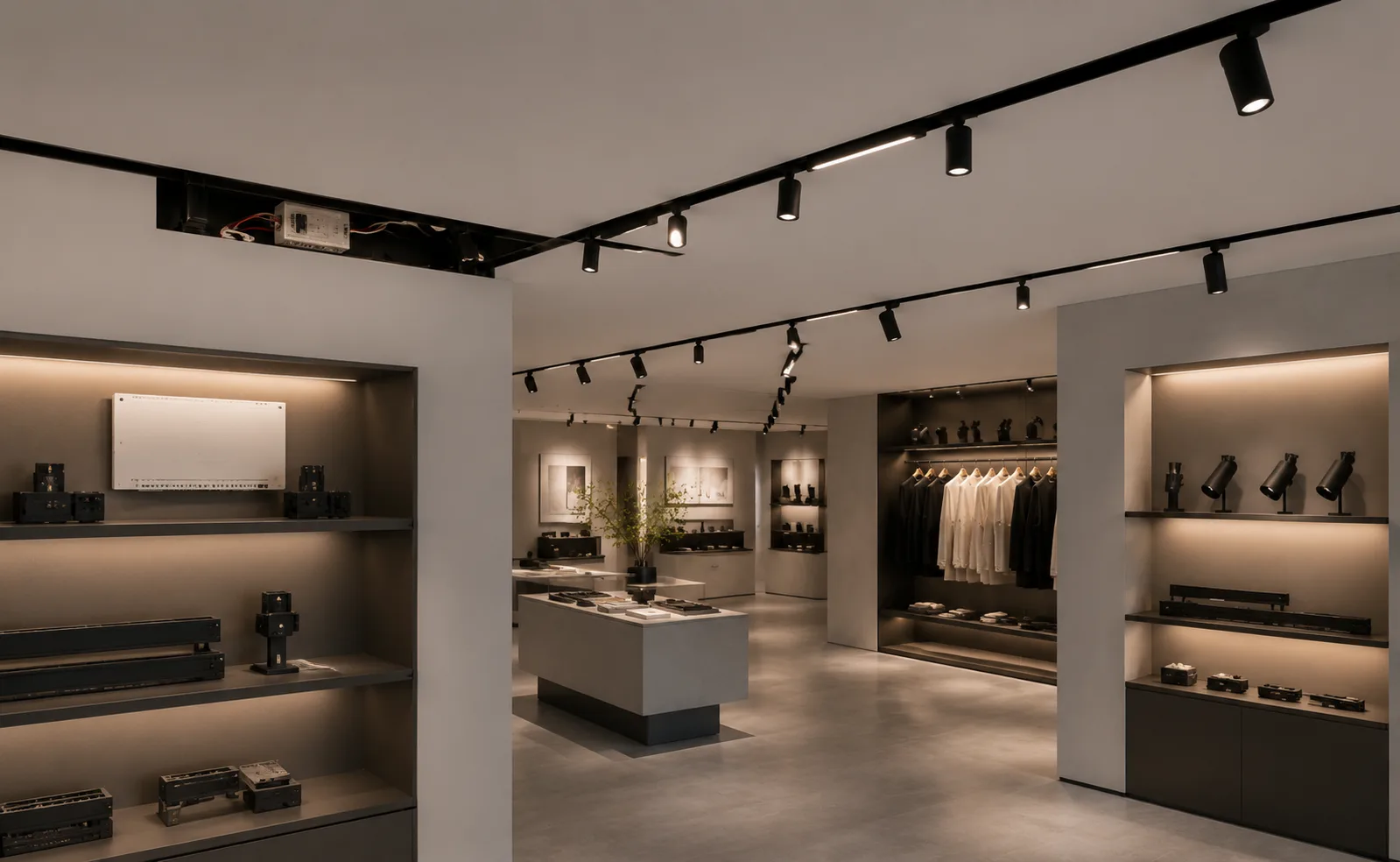
03 Capacity
Feeds, drivers and track loading must allow safe present and future use.

04 Hybrid
Use fixed SLIM downlights where flexibility adds little value.
02Where Magnetic Track Fits Best
Retail stores benefit from movable accents as merchandise changes. Modern offices can adapt collaboration areas, reception points and project displays without cutting new ceiling openings. Hospitality lounges and residences may use a recessed or surface-mounted track as a precise graphic element, though intimate spaces require careful glare control. Museums and galleries may appreciate modularity but should confirm conservation, accessory and control requirements. MAGFIT and MAGENTRA are relevant magnetic track families for coordinated modular schemes, while SLIM can complement areas where compact recessed downlighting is more appropriate. The strongest application is not necessarily an all-track ceiling. Combining adaptable track in changeable zones with fixed light in stable rooms often creates a calmer and more economical result.
Magnetic Track Planning Checklist
| Design layer | Key decision | Coordination item |
|---|---|---|
| Track infrastructure | Route and mounting type | Ceiling, corners and feeds |
| Electrical system | Load and control groups | Driver capacity and voltage drop |
| Lighting modules | Optics, spacing and glare | Task, surfaces and sightlines |
03Design the Track Before Choosing Modules
Establish track routes from furniture, partitions, ceiling joints and likely focal surfaces. Decide whether the track should disappear into a recessed slot, sit on the surface or hang as a suspended line. Corners, feeds, blank sections and end details must be resolved as carefully as illuminated modules. Calculate electrical capacity from the total module load and the permitted loading of each feed, allowing sensible spare capacity for future changes. Driver location, voltage drop, emergency circuits and control topology need early coordination. Magnetic does not mean universally compatible: tracks, adapters, modules and power supplies are generally system-specific. A substitution should therefore be reviewed as a complete system rather than as an individual luminaire swap.
04Compose with Modules, Not Repetition
Spot modules provide focus, linear modules can wash surfaces or deliver task light, and diffuse elements contribute general illumination. Their spacing should reflect the lighting role, not an urge to fill every visible track segment. Keep high-luminance modules away from normal seated sightlines and use shielding or deep optics where possible. Align module positions with architectural datums, but allow enough freedom for future furniture changes. In an office, vertical brightness on walls and faces can be more valuable than dense downward light over circulation. Separate control groups let task, presentation and evening scenes maintain different balances. Document acceptable module counts and aiming limits so that later reconfiguration does not overload the track or undermine visual comfort.
05Commission for the Next Layout as Well as This One
At handover, verify mechanical engagement, electrical loading, dimming addresses, aiming and scene levels. Provide spare modules and a clear compatibility schedule, and record which positions are reserved for future use. Cleaning instructions matter because continuous slots and exposed contacts can collect dust. For a modern office project, MAGFIT or MAGENTRA can establish an adaptable lighting spine through collaborative areas, while SLIM maintains quiet, fixed downlighting in rooms unlikely to change. The design succeeds when flexibility feels purposeful rather than temporary. Users should be able to adapt the system within defined boundaries without needing to reinterpret the original lighting concept or compromise comfort every time furniture moves. Before approval, test how a user removes and reinserts each module and whether the mechanical retention feels secure in every mounting orientation. Confirm that modules cannot be connected to an incompatible track that looks similar, and label feeds, circuits and maximum loads discreetly. Digital control addresses should remain understandable after modules move; otherwise flexibility can create commissioning confusion. Agree whether facilities staff may rearrange luminaires or whether changes require a lighting technician. Keep a small stock of matching optics and blanking pieces so the track still looks intentional after adaptation. Finally, review the ceiling with only the essential modules installed. The ability to add light later is valuable, but leaving some capacity unused often produces the clearest architectural result and the most credible future flexibility.