
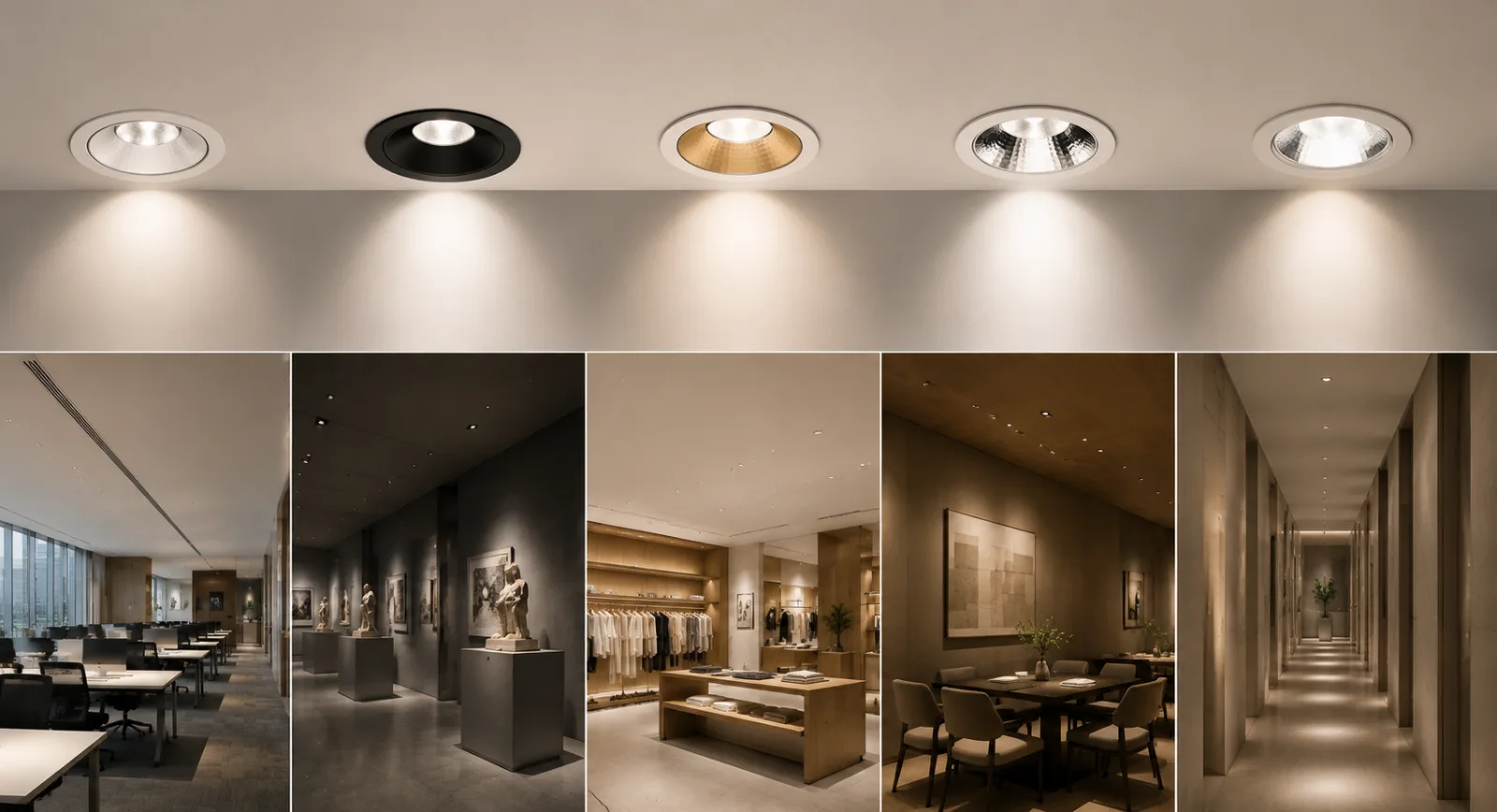
KEY TAKEAWAYS
- Begin with the task and ceiling condition.
- Fixed and adjustable downlights solve different visual problems.
- Output must be paired with beam distribution and glare control.
- Colour, dimming and maintenance belong in the specification.
- Use one coherent family only where its variants genuinely fit.
01The Ceiling Detail Sets the First Boundary
Before comparing wattage or trim colour, inspect the ceiling. Available plenum depth, cut-out size, insulation, air-handling requirements, fire strategy and access can immediately remove unsuitable options. A compact luminaire may solve a shallow void but still need clearance for its driver and thermal management. Trimless housings require coordination before finishing; retrofit or replaceable modules need a workable removal path. The visual choice also matters. A deep fixed downlight can disappear into a quiet ceiling, while an adjustable unit reveals its orientation but directs light toward displays or walls. Choosing the right downlight is therefore an integration exercise involving architecture, services, installation sequence and future maintenance—not a last-minute substitution based on diameter.
How to Choose the Right Downlight for Different Applications — Design Essentials
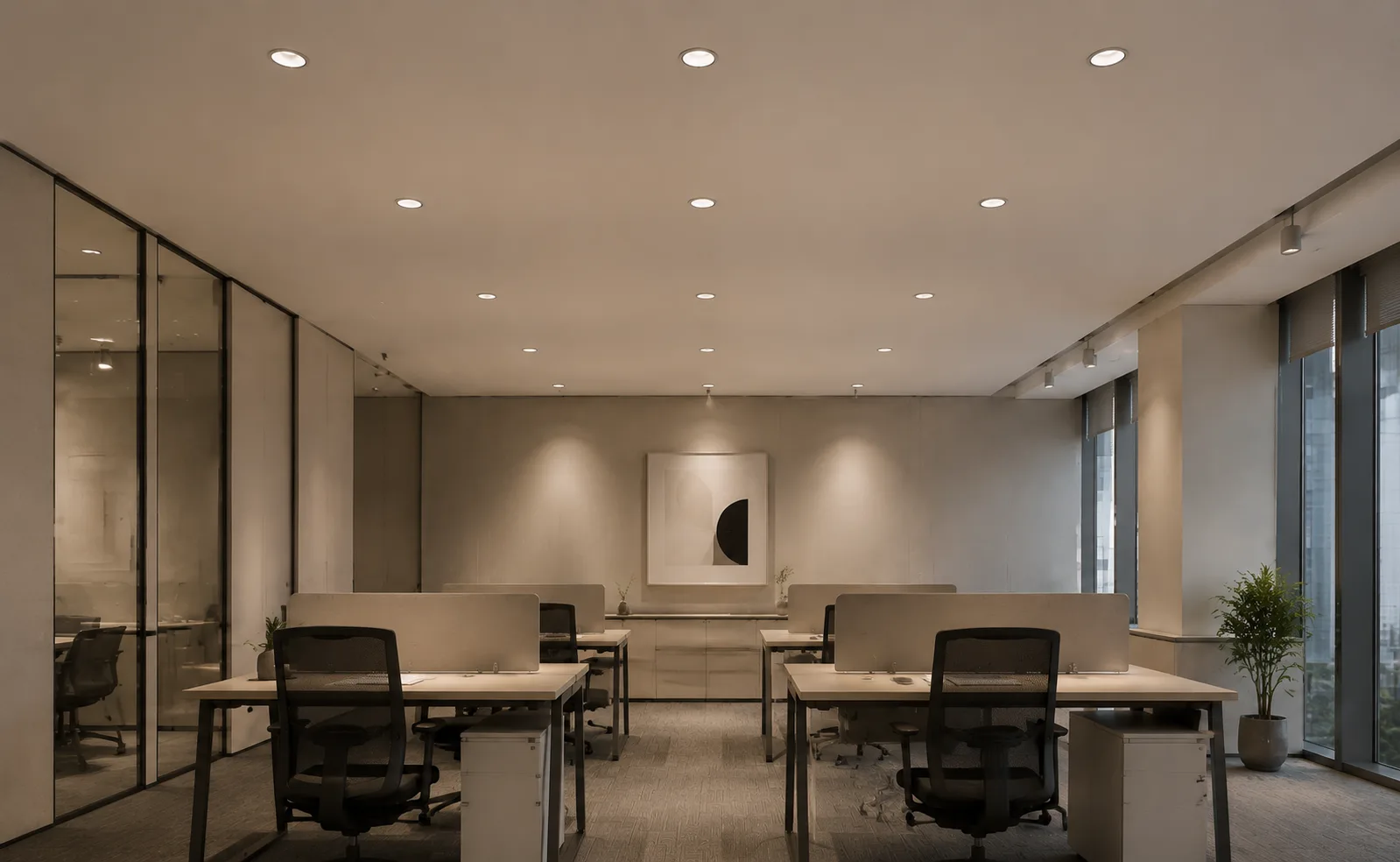
01 Fixed
A quiet ceiling presence for stable ambient or task layouts.
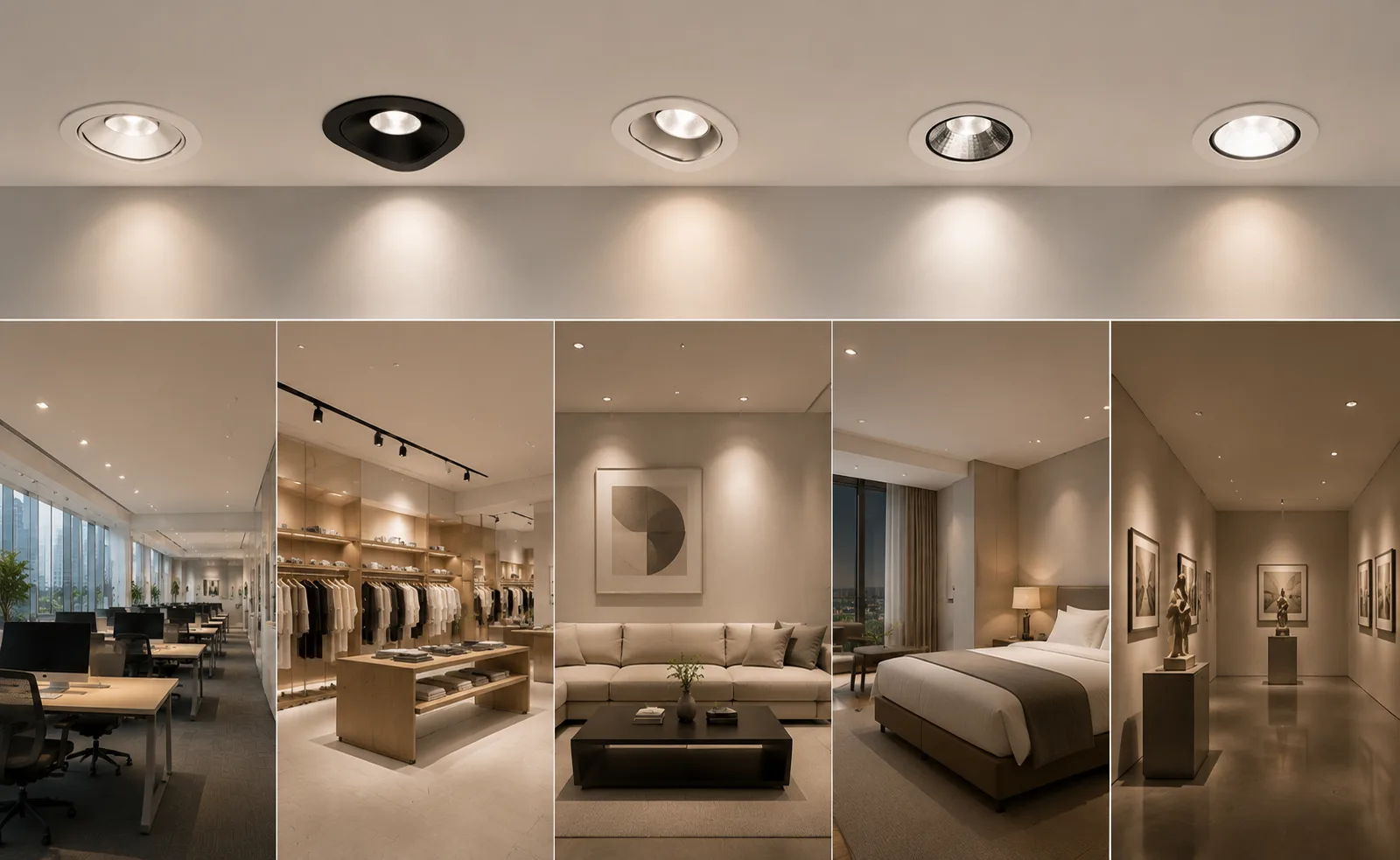
02 Adjustable
Directional control for merchandise, artwork and changing displays.
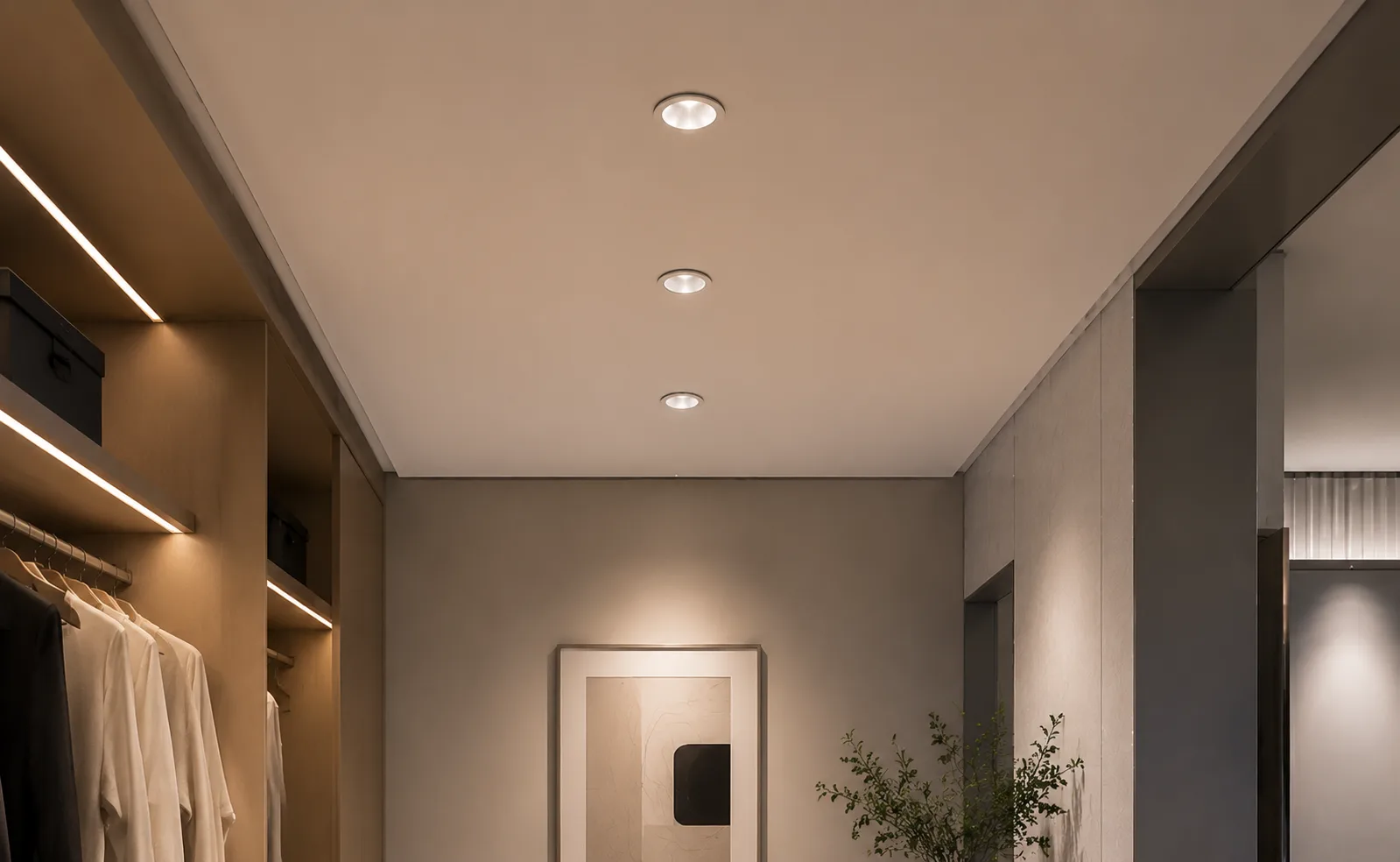
03 Compact
Reduced depth or aperture where ceiling coordination is tight.
04 System
Matched optics, colour and controls across different room functions.
02Define the Job of Each Downlight
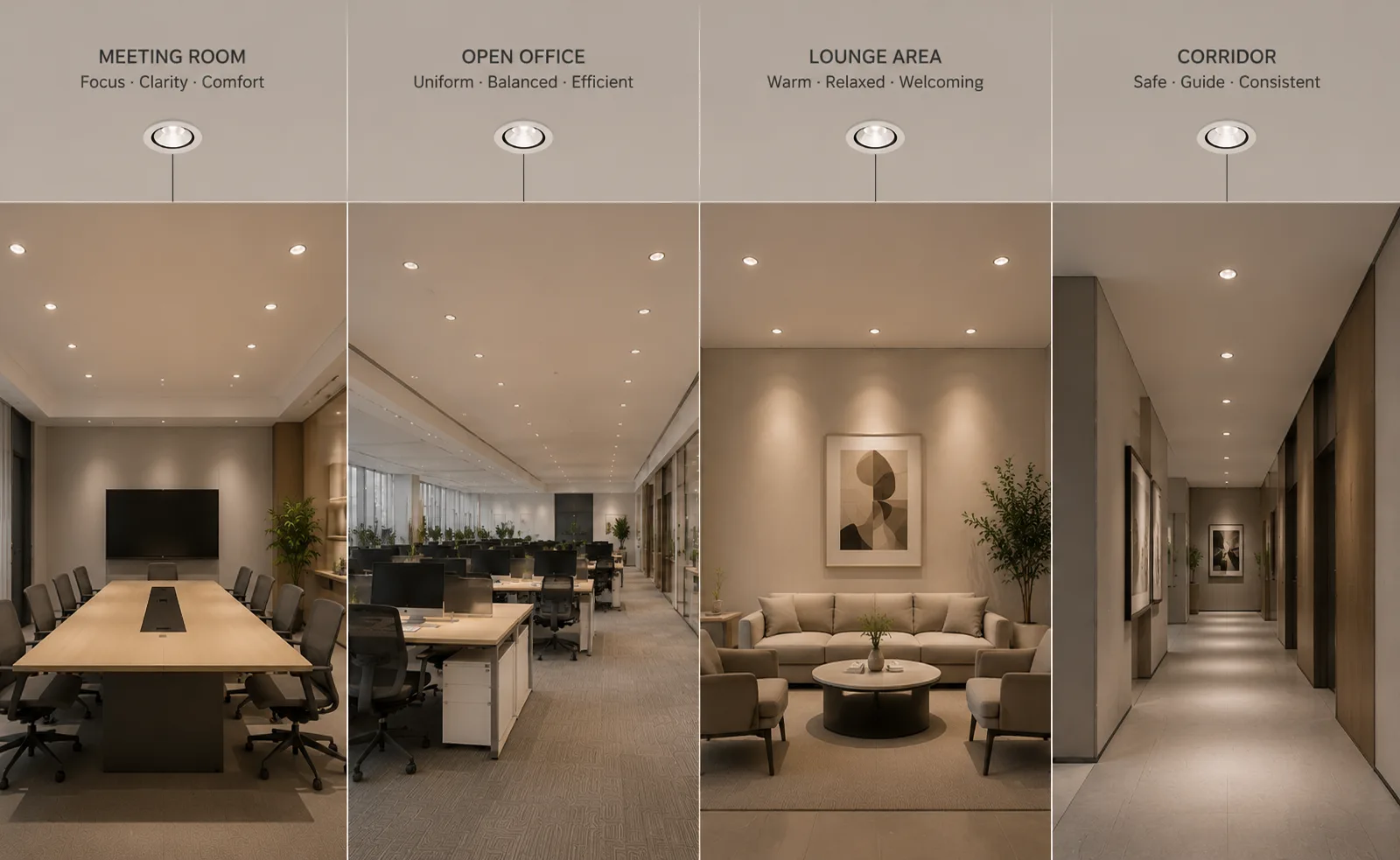
Ambient lighting asks for comfortable coverage and controlled brightness. Accent lighting needs directional intensity, aiming range and optical accessories. Wall-focused lighting requires a distribution designed for vertical uniformity rather than a generic flood. High-ceiling spaces need sufficient candela to deliver useful illuminance at long throw, while corridors often benefit from wider spacing and calm visual cut-off. In retail, one ceiling may combine all these roles. INTERO is relevant where adjustable high-output downlighting and visual comfort are needed. SLIM supports high output in restricted ceiling conditions. EMMA can contribute to general application-led downlighting. The family should follow the task map, with each optic and output package identified rather than described only by product name.
Downlight Selection Matrix
| Application condition | Priority | Relevant direction |
|---|---|---|
| Changing retail display | Aiming and accessory control | Adjustable downlight |
| Shallow ceiling void | Depth and driver coordination | Compact high-output downlight |
| Stable ambient layout | Comfort and consistent coverage | Fixed/general downlight |
03Balance Output, Beam and Comfort
A lumen figure cannot predict the experience below the fitting. Narrow beams concentrate intensity; wide beams cover more area; deep optical control can reduce direct glare but may affect efficiency and ceiling brightness. Calculate maintained illuminance on horizontal and vertical planes, then inspect luminaire luminance in common sightlines. A small aperture is not automatically low glare: packing high output into a compact source can raise luminance significantly. Conversely, a larger luminous opening may feel comfortable when well shielded and positioned. Spacing should avoid both dark pockets and excessive overlap. Dimming can tune scenes after commissioning, but it should not be used to rescue a fundamentally unsuitable distribution or an uncontrolled aperture.
04Specify Light Quality and Controls
CCT, CRI, chromaticity tolerance, flicker performance and dimming protocol should be coordinated across all downlight types in the space. Retail and hospitality projects may require strong red rendering or TM-30 data; offices may prioritise consistency and low glare over large quantities. Emergency operation, sensors and central control can affect driver selection and ceiling access. Confirm minimum dimming level, smoothness, switch-on behaviour and compatibility with the control system through testing. Where several products form one visual family, their colour and optical character should remain coherent. Replacement modules and drivers need traceable references so that maintenance years later does not introduce obvious changes in brightness or colour.
05Approve a Schedule by Application
Create a room-by-room schedule that records function, ceiling condition, cut-out, trim, output, optic, colour quality, control type and accessory. Use calculation for coverage and glare, then mock up the most sensitive zones. A retail project might assign adjustable INTERO units to merchandise, SLIM to shallow perimeter ceilings and EMMA to calmer circulation or supporting light. This is not a recommendation to multiply fixture types without discipline; it is a way to give each architectural condition an appropriate tool. The strongest downlight scheme often looks simple because the complexity was resolved in the specification. Visitors see balanced surfaces and clear hierarchy, while installation and maintenance teams receive precise, repeatable information. Substitution control deserves its own line in the schedule. Two downlights with the same cut-out, wattage and nominal beam angle may differ substantially in peak intensity, shielding, colour consistency, driver size and thermal behaviour. Define the performance characteristics that cannot change, and require revised calculations or samples when an alternative is proposed. On site, inspect plaster-in housings before ceilings close, confirm that drivers remain accessible and check that insulation or services do not compromise cooling. During commissioning, aim adjustable units, set maximum output and label control groups. Provide the facilities team with optic and accessory references rather than only the visible trim description. These steps turn a carefully selected downlight into a maintainable system instead of a one-time visual decision.